
Prologue
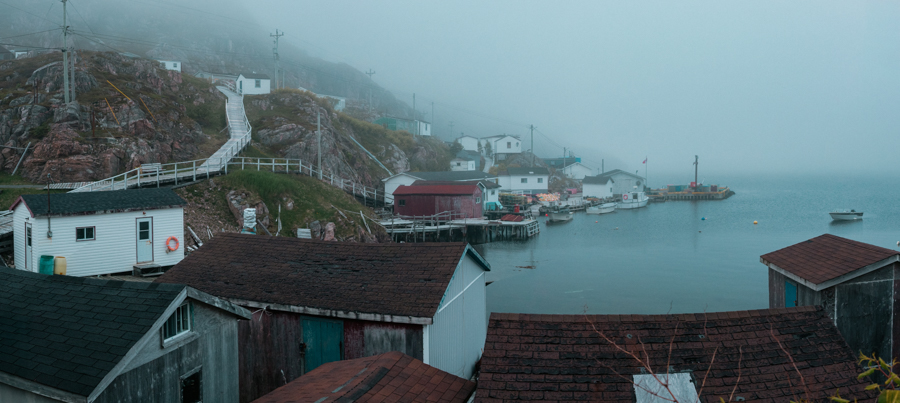
McCallum is located along Newfoundland’s remote south coast, accessible only by ferry. Once sustained by the fishery and connected to neighbouring outports by the coastal boats, it is now home to only a handful of year-round residents. For three days, I walked its boardwalks with my family, camera in hand, hoping to photograph a way of life I remembered from childhood. What I found instead was something different, but no less meaningful.
The Place I Came Looking For
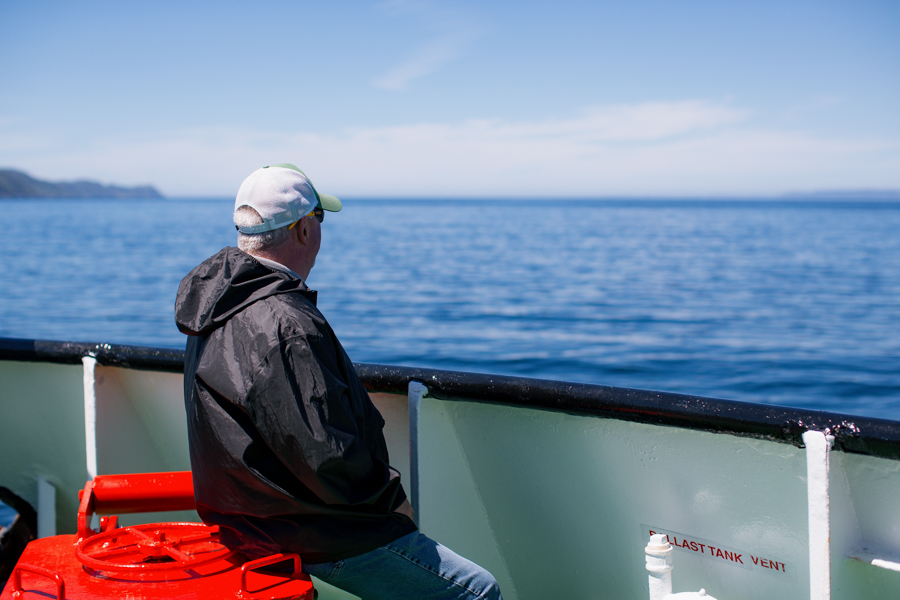
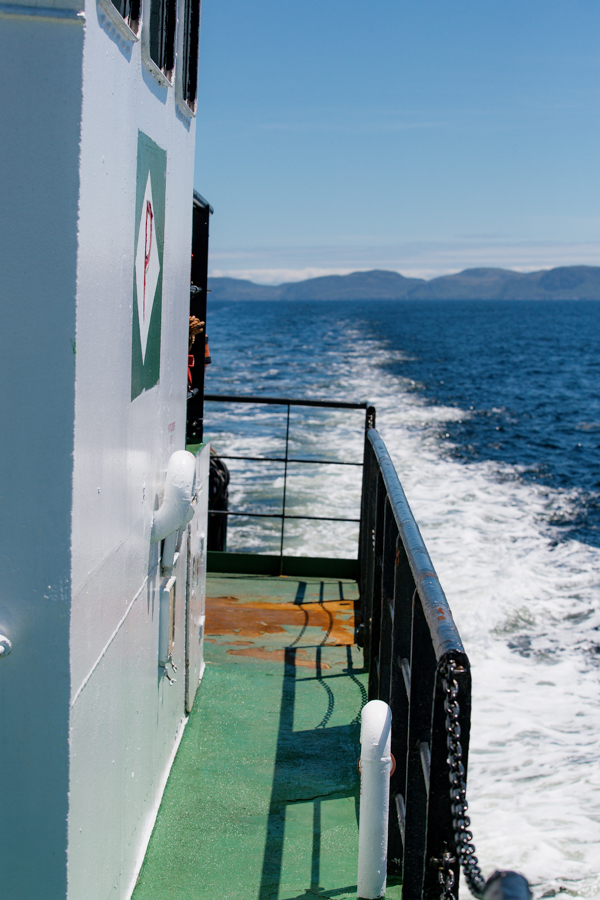
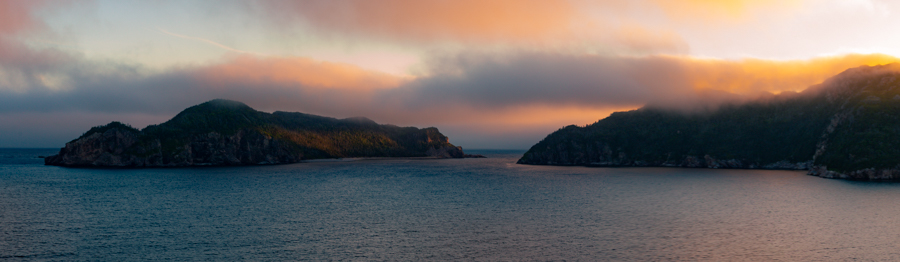
The ferry eases away from Hermitage, leaving Newfoundland’s road network behind. Ahead lies a coastline carved by glaciers, wind, and sea. Where steep granite hills and cliffs descend into sheltered coves. Somewhere beyond those headlands is McCallum, a community that, despite existing for more than two centuries, remains inaccessible by road. Like several of Newfoundland’s remaining outports, it can only be reached by boat.
Long before the harbour came into view, I was already carrying another place with me.
As a child, I spent time in La Poile, the outport community where my grandmother was born. My memories of those visits are a bit fragmented, but very vivid. The kind of memories that I’ve learned to call “flashbulb memories.” They have remained remarkably clear, and meaningful, despite the passing decades.
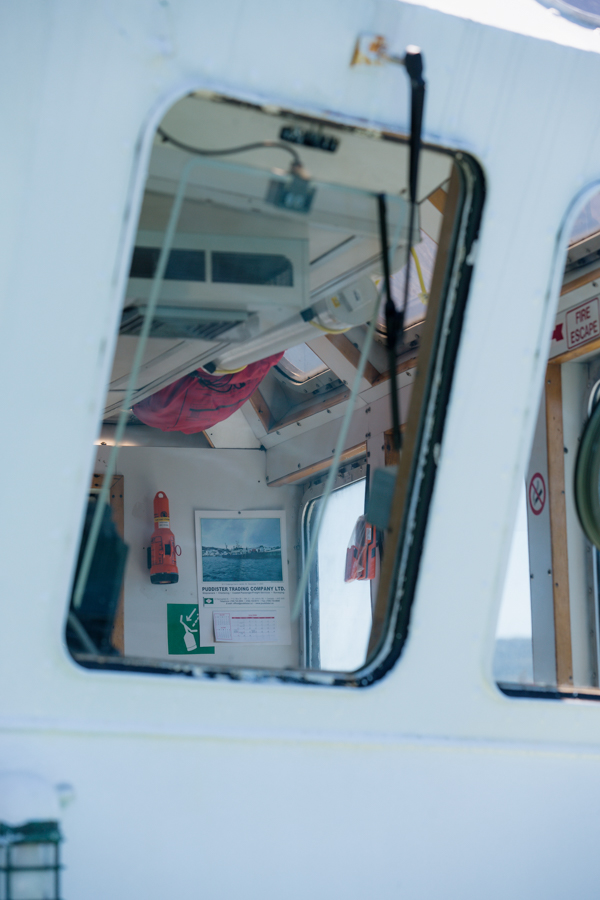
I remember stepping onto the wharf and finding it alive with people waiting for the ferry. It was the Marine Runner when I was a child. Most recently it’s been via one of the Puddister’s ferries. Labrador retrievers wandered freely among stacks of freight and parked ATVs pulling empty trailers, ready to carry groceries and supplies home. Fishermen worked nearby stages where the smell of bait and fresh fish drifted across the harbour. At the little shop, older residents gathered not just to shop for their food, but to catch up on news and stories. Boat engines echoed throughout the day, while teenagers, home for the summer, leapt from the wharf into water that was never as warm as they pretended it was. On Saturday evenings, music spilled from stage heads where people gathered over beer, yarns, and pots of boiled mussels that were picked that afternoon from a cove nearby.
Those memories became, for me, the definition of an outport.
Whether entirely accurate or softened by nostalgia hardly matters now. They shaped the way I understood Newfoundland’s coastal communities and, years later, they shaped my desire to photograph them.
McCallum had been on my list for a long time.
So had Francois, Grey River, Ramea, and several other communities scattered along Newfoundland’s isolated south coast. I had already visited La Poile and Rencontre East, but McCallum lingered in my mind for another reason. After narrowly rejecting government resettlement in two separate votes, it remained one of the province’s smallest inhabited outports. News reports suggested the conversation surrounding its future had not disappeared. With the population continuing to decline and the local school facing closure after its final student graduated, I couldn’t ignore the feeling that the opportunity to experience McCallum as a living community might not exist much longer.
More than anything though, I wanted my own children to experience something of what I had known as a boy.
I wanted them to arrive by ferry instead of highway.
To hear boat engines instead of traffic.
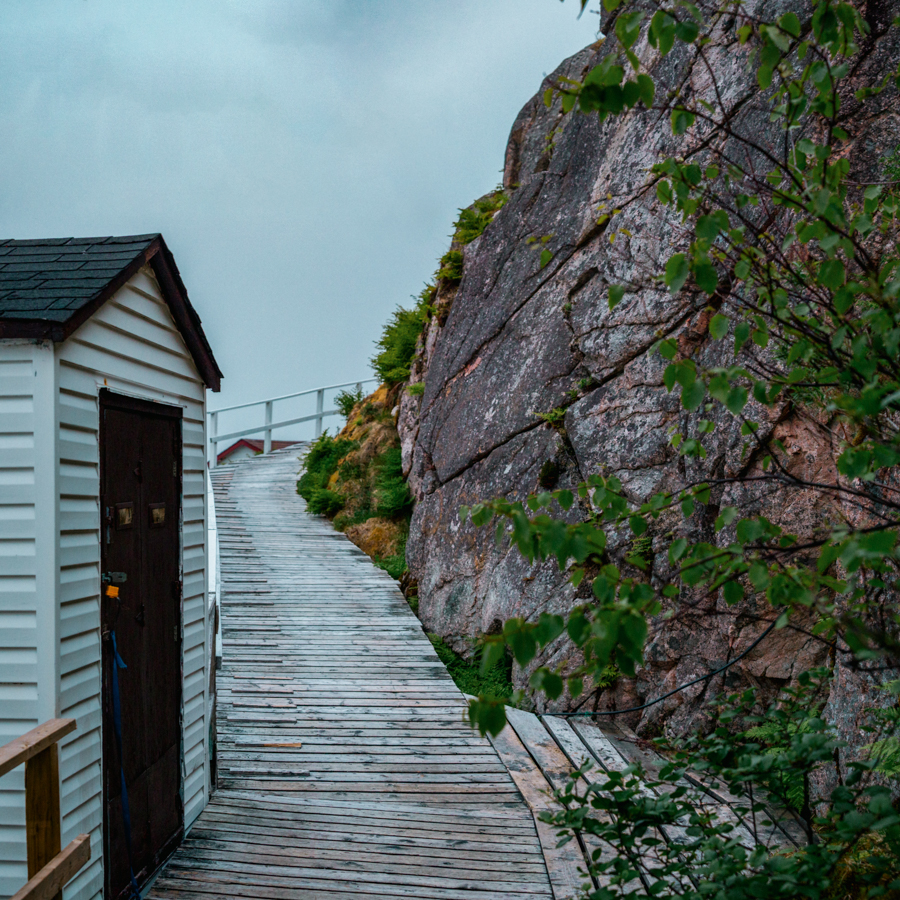
To wander cliffside boardwalks instead of sidewalks.
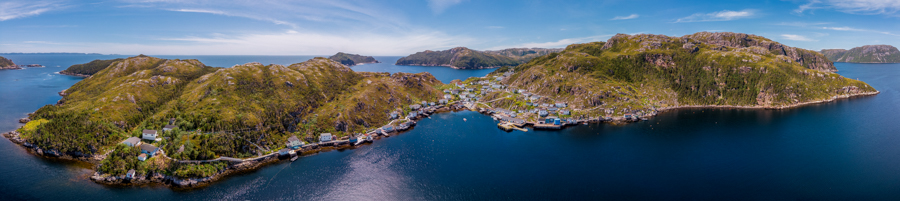
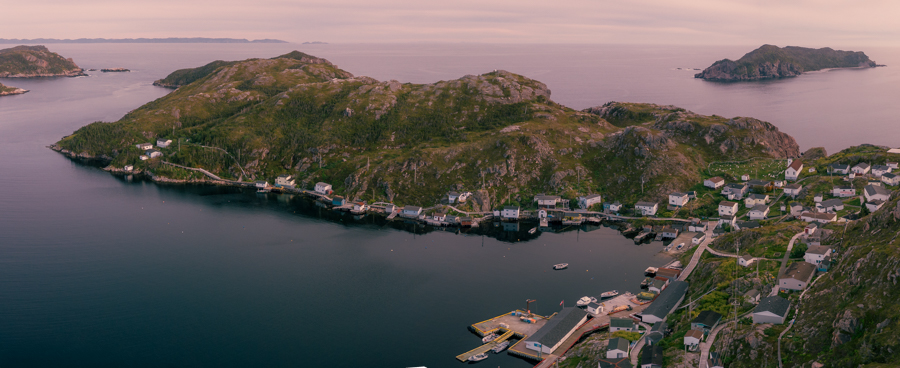
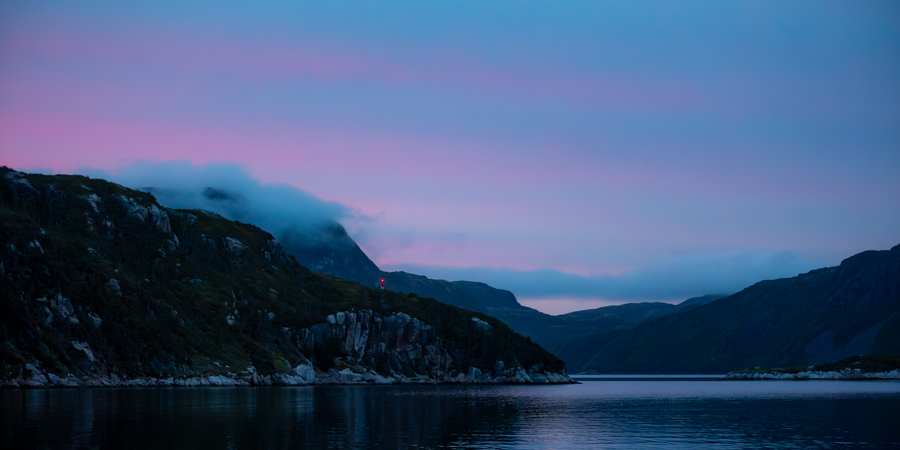
To discover a Newfoundland that once existed in hundreds of sheltered coves, where communities were built in near inhospitable places because of the proximity to the ocean, and the living it provided.
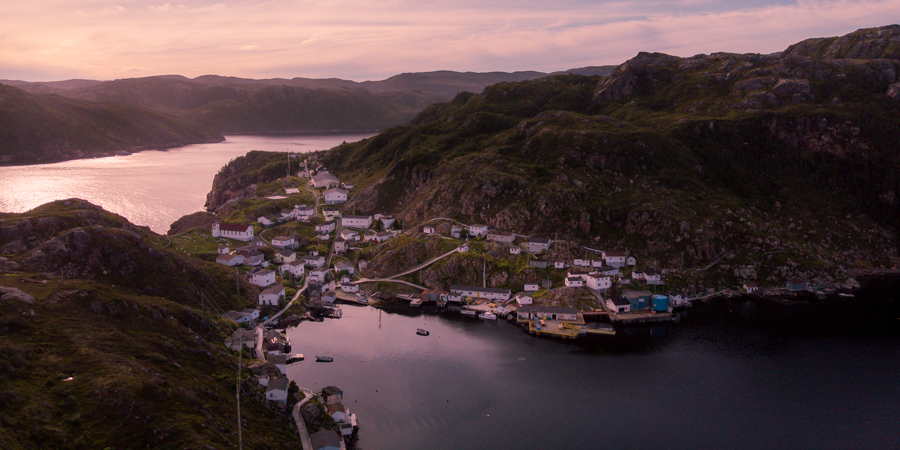
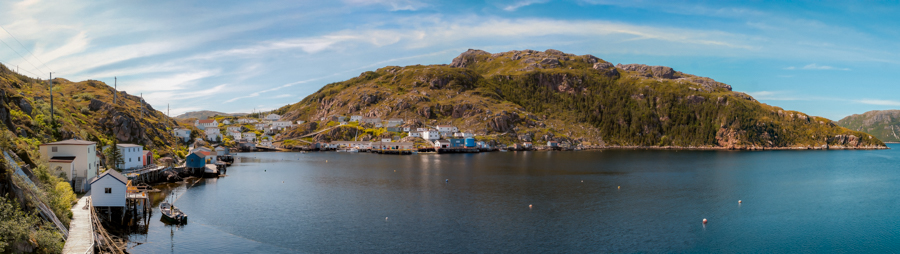
As the ferry rounded the final headland, McCallum appeared in front of us.
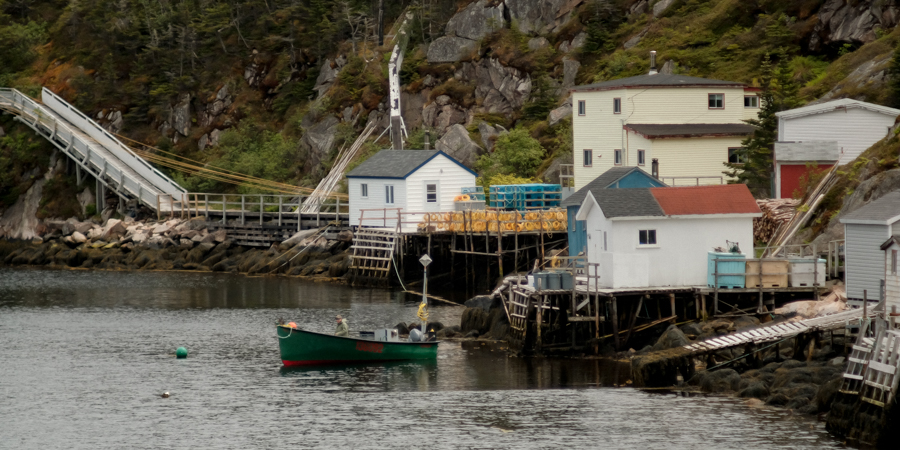
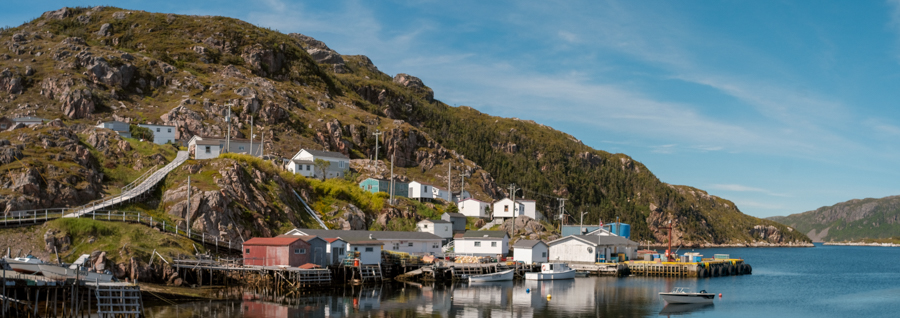
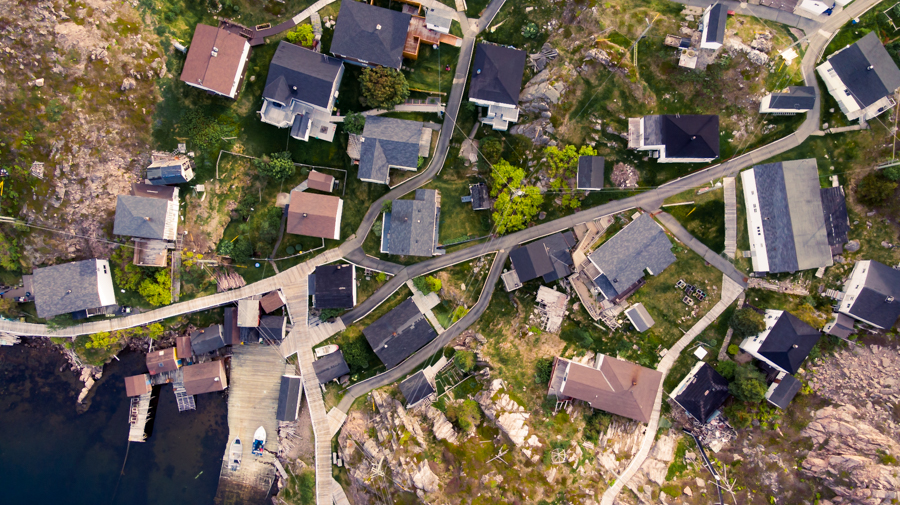
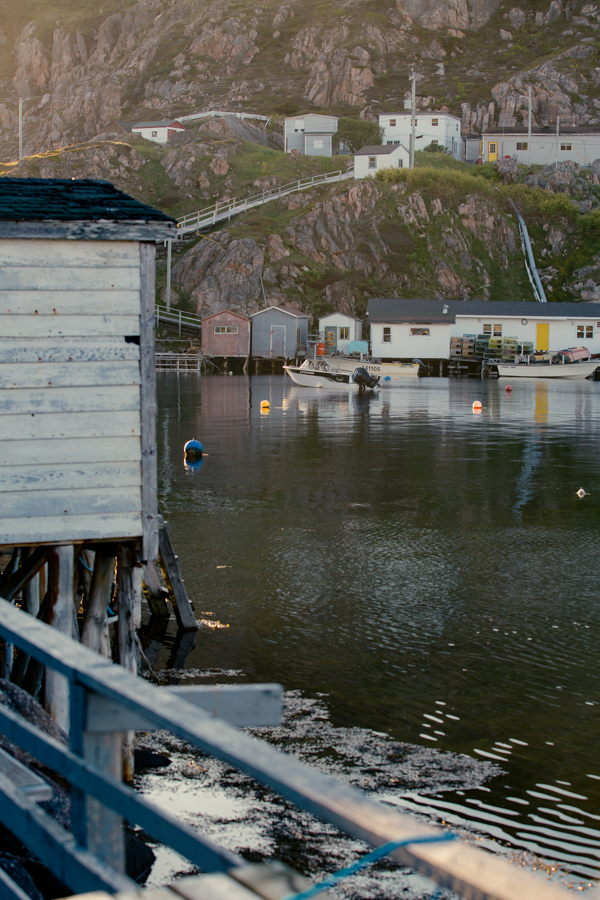
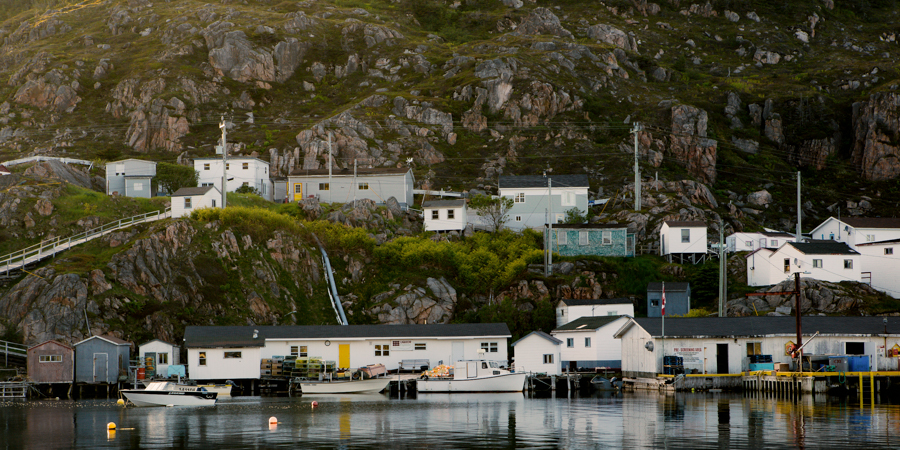
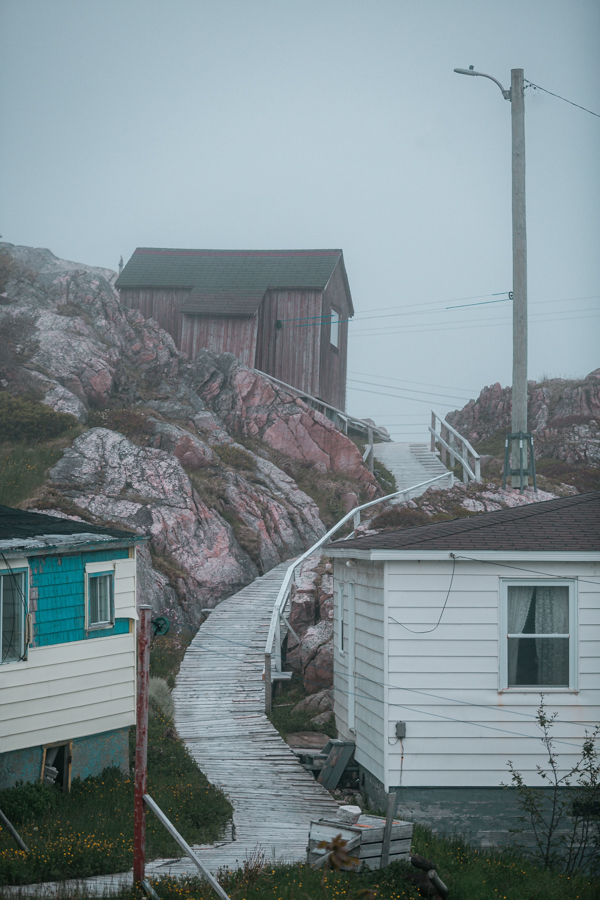
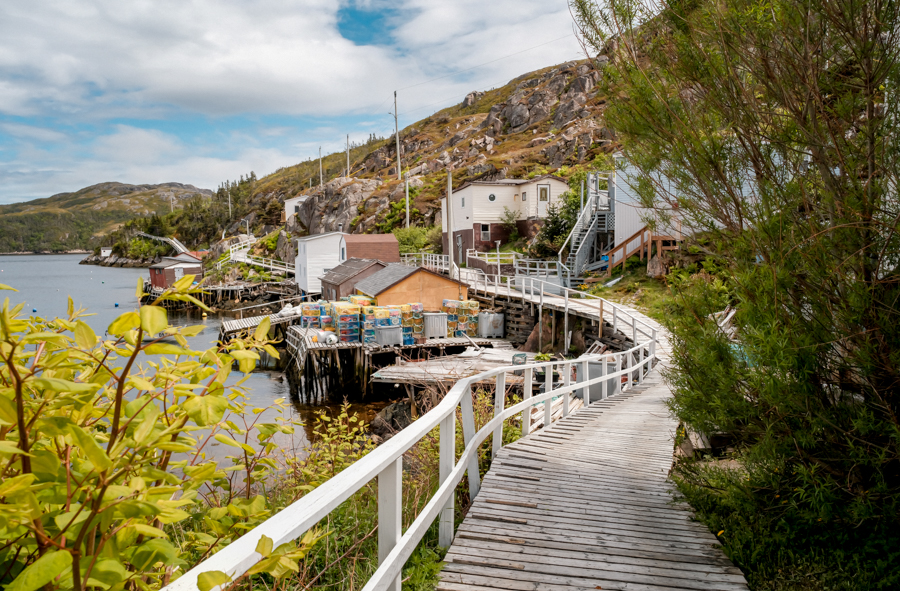
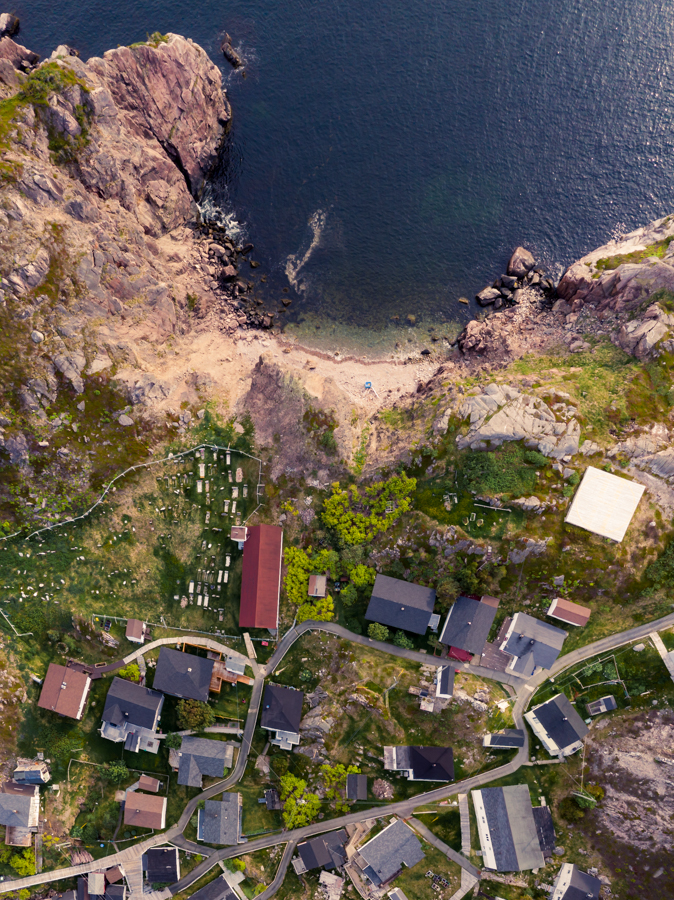
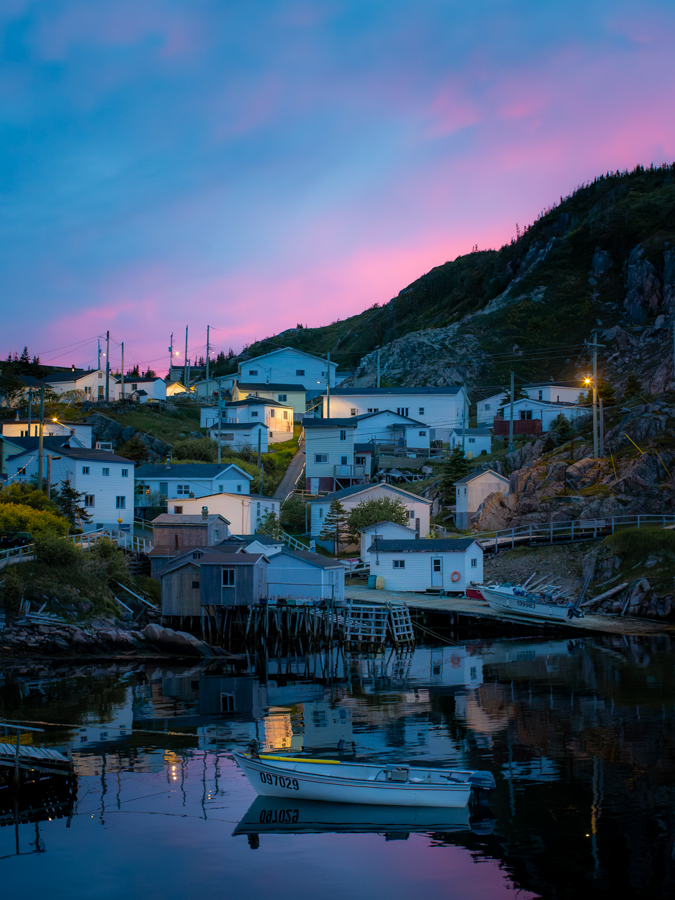
White houses climbed gently around the harbour, tucked between rocky hills streaked with green heath and patches of spruce. Boardwalks stitched together homes, stages, and sheds that seemed to grow naturally from the bedrock itself. Before the ferry had even tied up, I had my camera in hand.
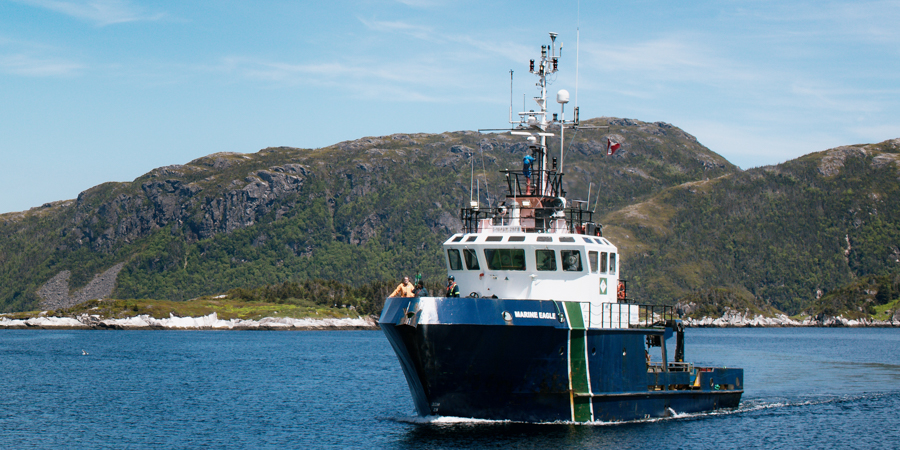
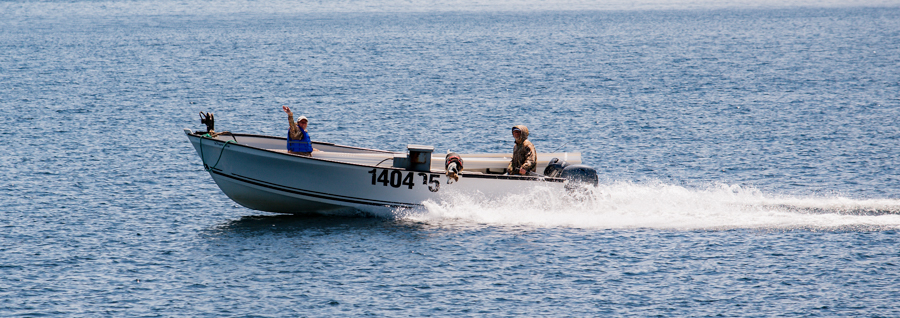
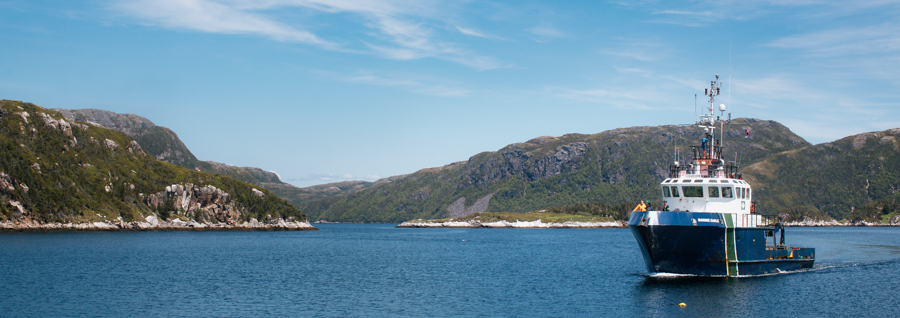
A speedboat swept past our ferry, the Marine Eagle, and a woman sitting near its bow caught my eye. She smiled and waved.
I waved back while pressing the shutter.
It felt like the beginning of the story I had come hoping to find.
The Quiet Harbour
The ferry slipped away almost as quickly as it had arrived.
Within moments, the movement around the wharf began to fade. A handful of passengers disappeared along the boardwalks. The speedboat that had welcomed us to the harbour was already gone.
I remember standing for a moment with my camera, taking in the scene before following the boardwalk toward our Airbnb.
Not too many people around.
This, I thought, was perfectly logical.
McCallum had become home to only about twenty residents. Even at the very beginning of summer, one couldn’t really expect to see a large crowd. Of course, others would arrive over the next several weeks as seasonal residents returned and people came back for the summer. Yet this wasn’t the Newfoundland I knew from my childhood days.
However, it was hard for me not to search for similarities to the places I remembered.
I was hoping to catch the familiar clatter of ATVs driving off the wharf loaded with groceries and other supplies.
None of them appeared.
I waited to hear fishing boats heading out through the harbour.
There were none.
I foolishly expected the unmistakable smell of fish drifting from nearby stages. A smell that, as a child, had seemed inseparable from outport life.
Nothing. Instead, there was only clean, salt air.
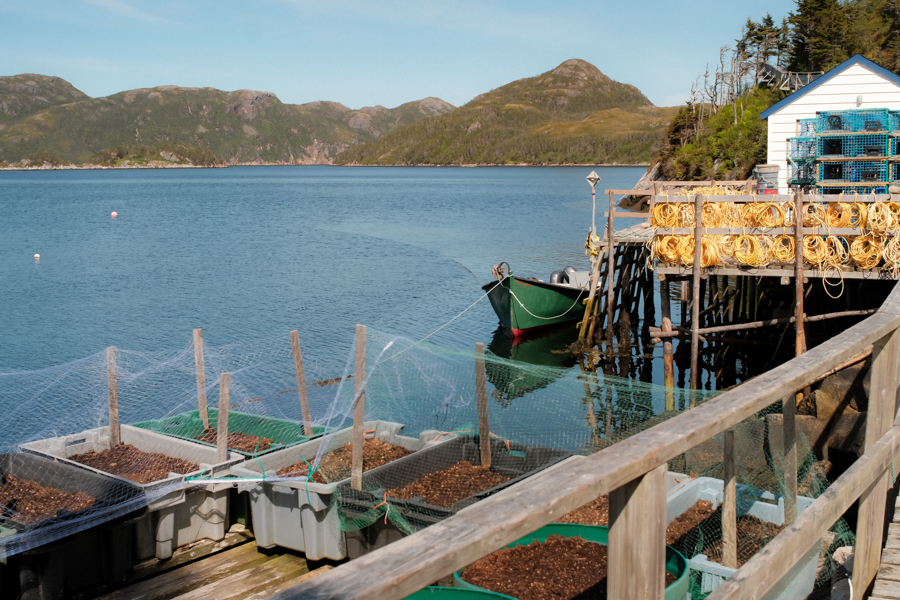
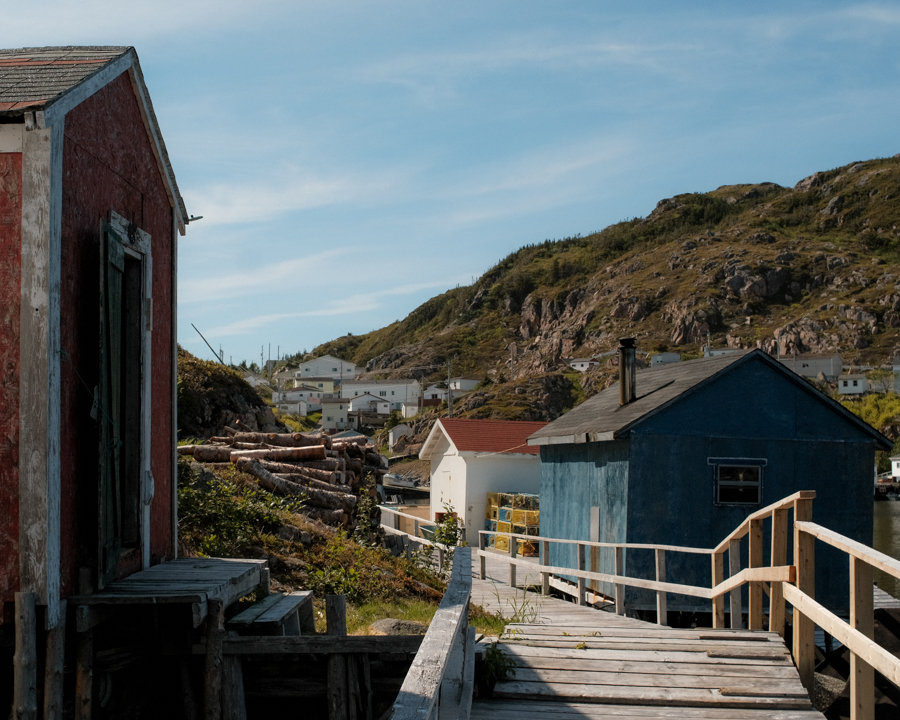
However, the stages were well-maintained and stood along the shore of the harbour. Weather-beaten boards spoke of years of work, but there were very few sounds of them being operated. They weren’t abandoned; they simply were not working.
That difference was becoming clearer with every step.
McCallum wasn’t decaying.
It wasn’t overgrown.
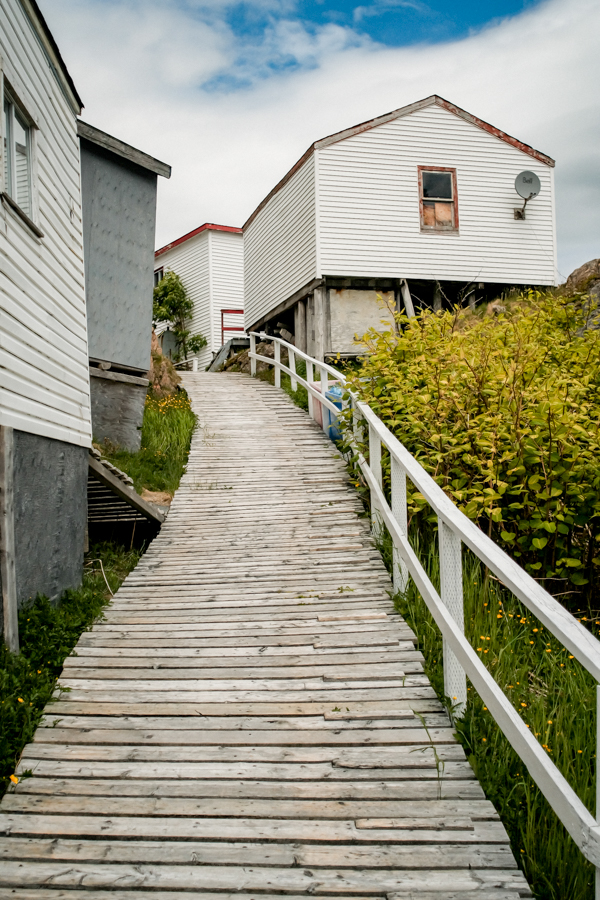
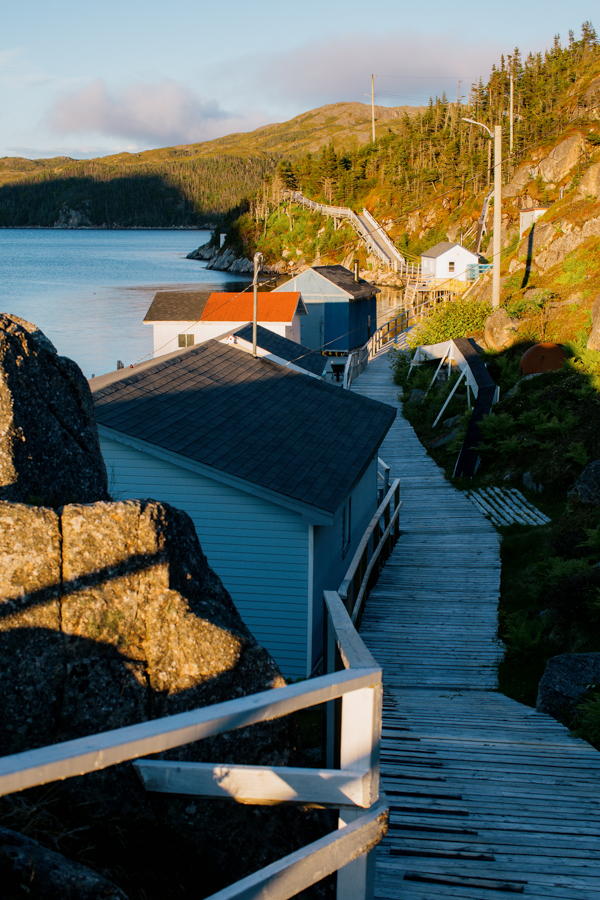
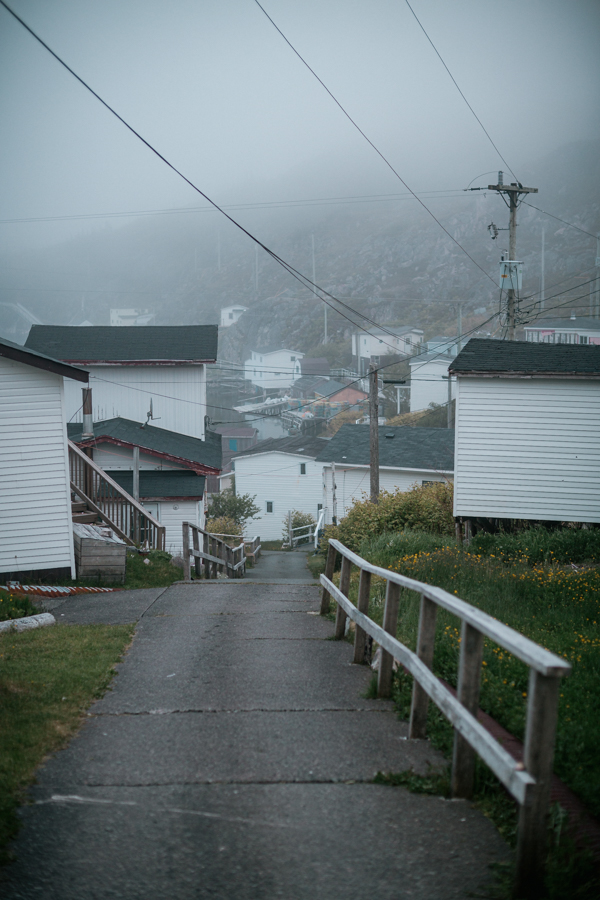
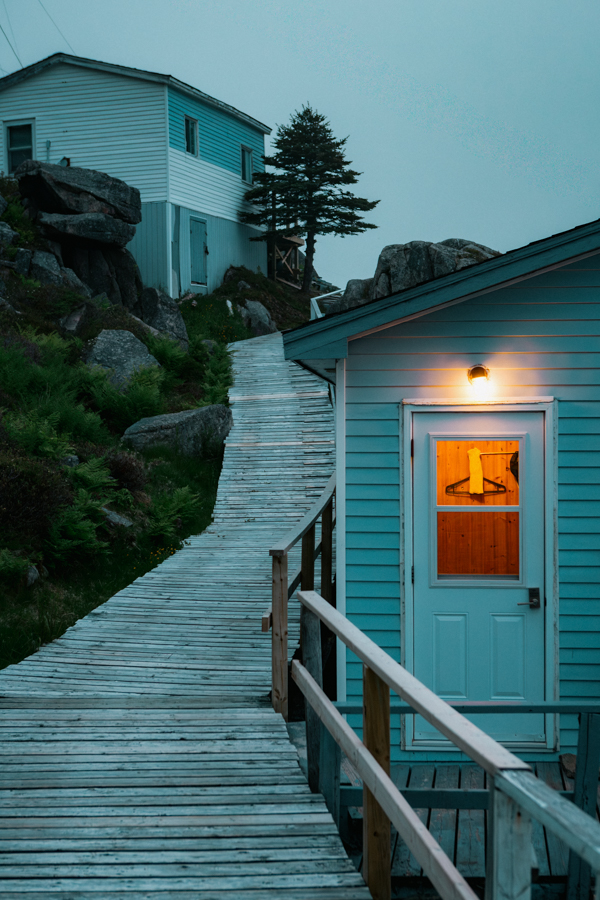
Its boardwalks were well-maintained, having strong handrails and wooden cleats where the path went up the rocks. Houses overlooking the harbour had carefully tended gardens, some with ornamental trees and shrubs. It was the evidence that the pride of place hadn’t decreased with the population. Even those houses that didn’t have anybody living in them merged well with the community. There weren’t too many ruined buildings here; the easiest way to recognize those houses that didn’t belong to anyone anymore was the lack of the electrical service mast that was pulled away since it wasn’t needed anymore.
Everything pointed to the careful maintenance.
Everything pointed to the fact that people still loved this place.
What was missing wasn’t the maintenance.
It was motion.
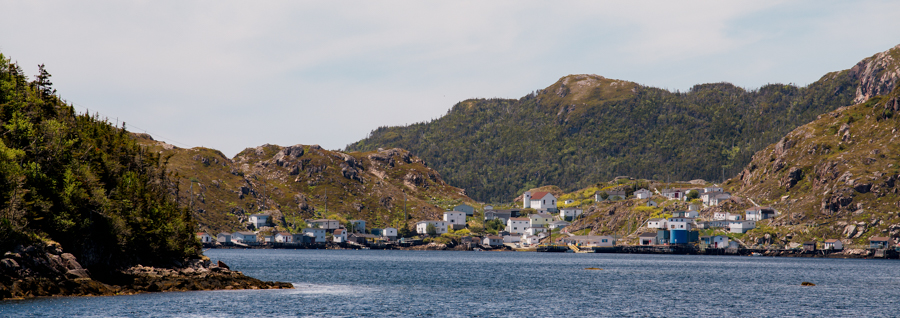
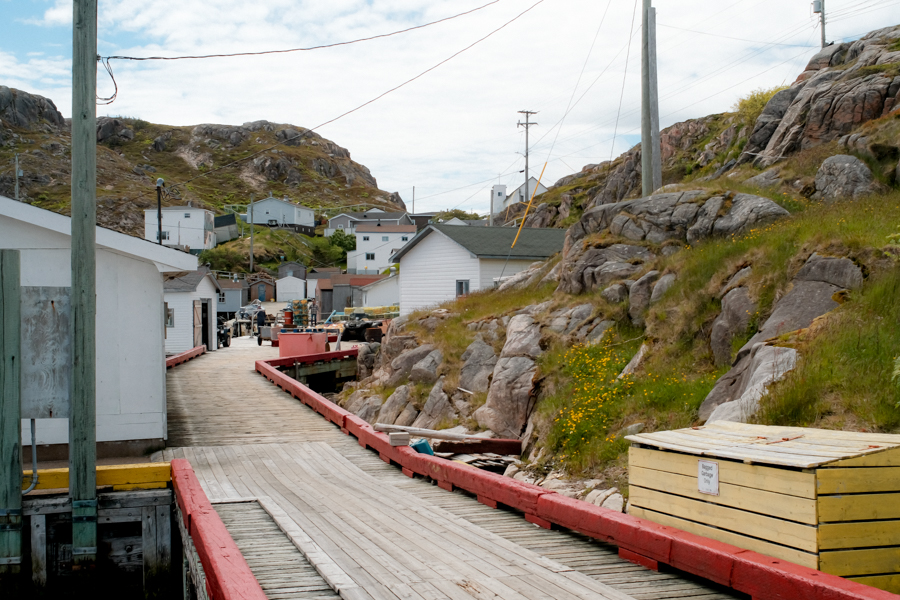
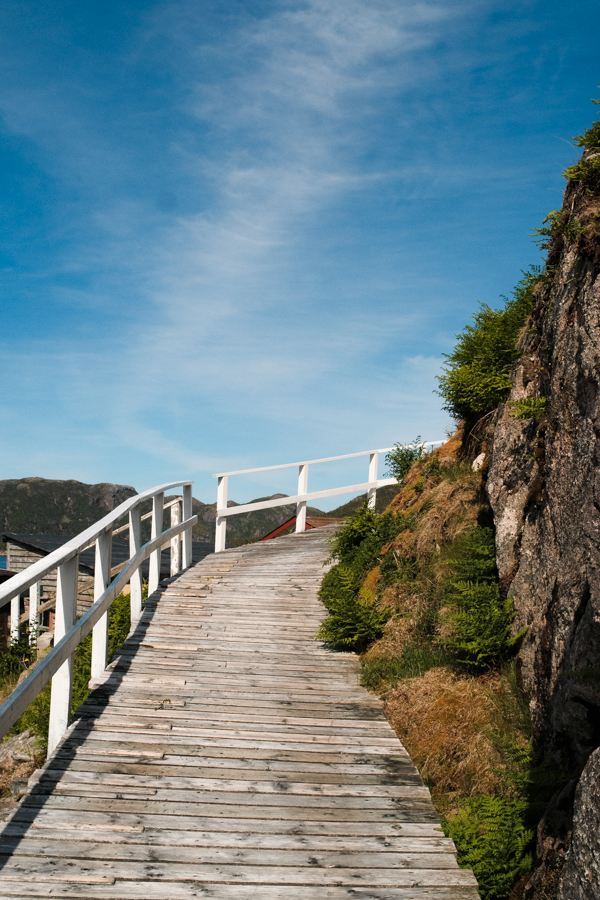
It was quite different walking through McCallum compared to walking through other communities I’ve visited before.
Without cars, the boardwalks became the town’s streets. They curved gently around rocky cliffs and sheltered coves before climbing toward the church and the closed school. The only paved stretch was a short concrete path leading uphill through the centre of town.
The sounds were so faint that you could notice them mostly due to the absence of everything else.
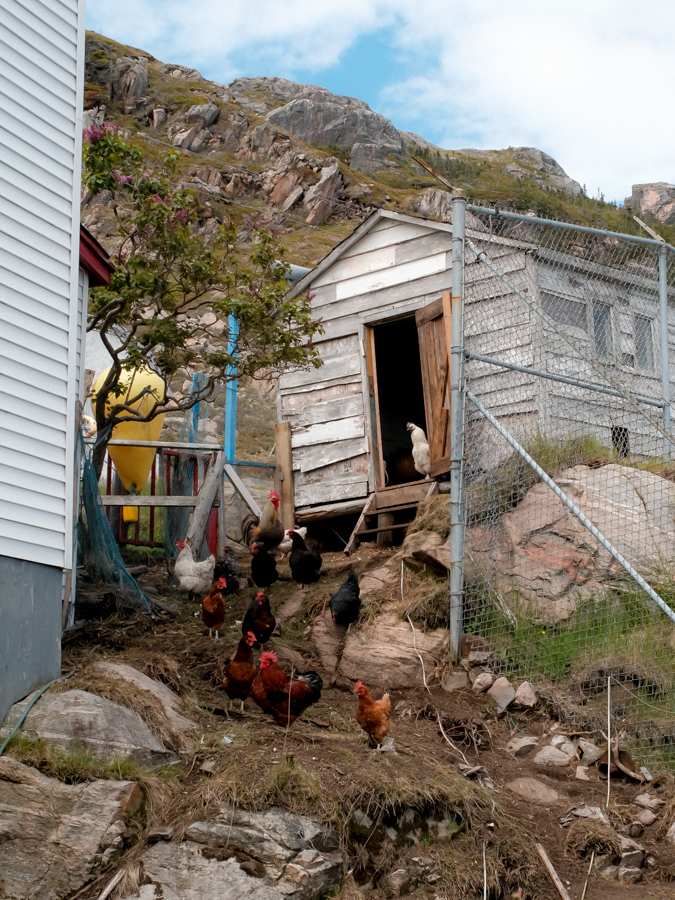
A rooster crowed somewhere across the harbour.
Gulls circled overhead.
Songbirds moved through patches of tuckamore.
Way down below the steady hum of the diesel generating station near the public wharf could be heard.
And then…
Silence.
Not complete silence.
Natural silence.
The kind of silence where every distant bird call and sound of the waves lapping at the stages could be easily heard.
There were no lawnmowers.
No passing trucks.
No horns.
No shouts of the children playing.
No conversations heard from neighbouring yards.
The community had a stillness that felt almost unfamiliar.
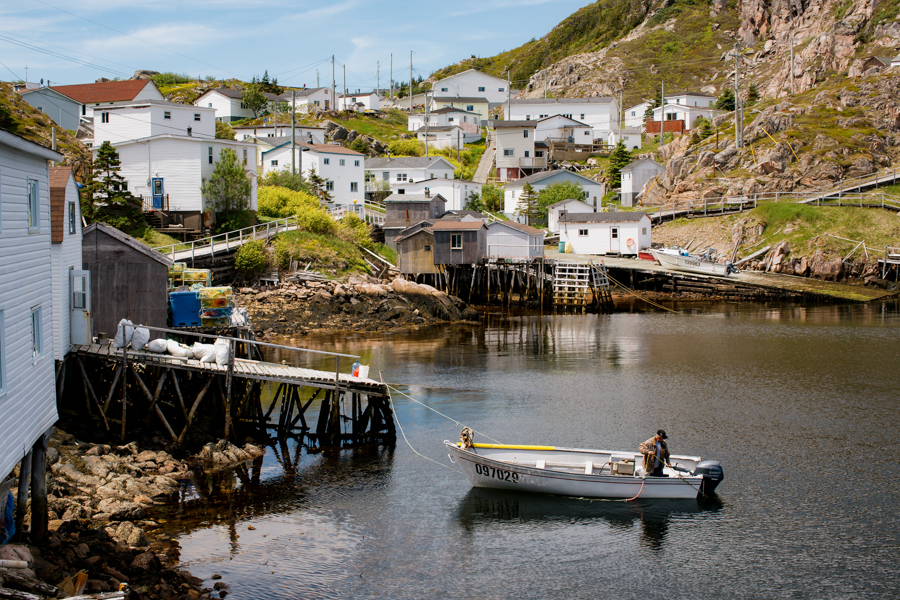
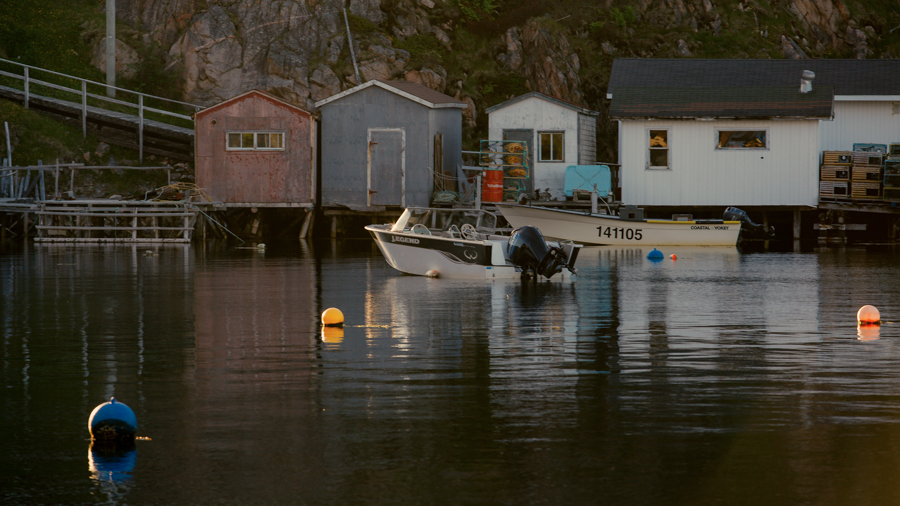
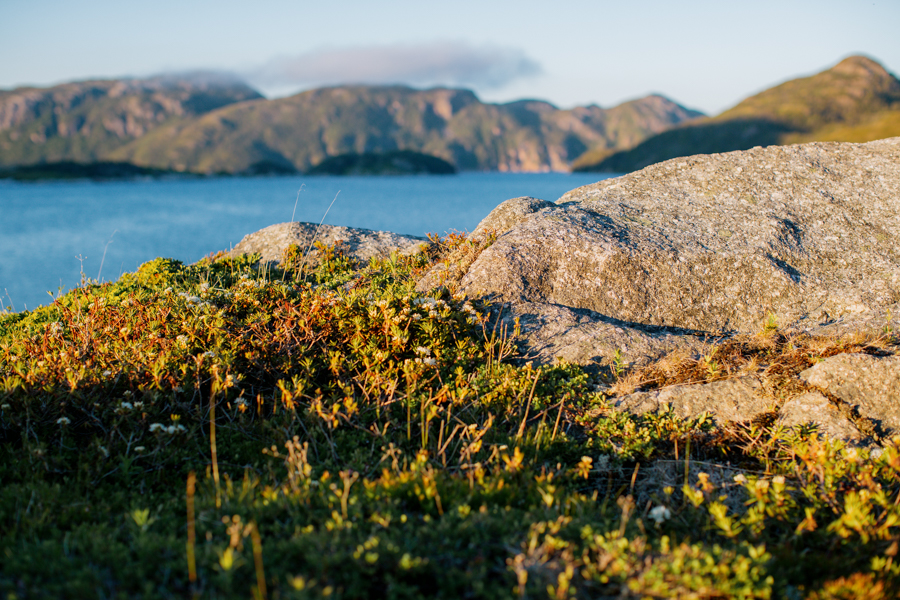
My children experienced McCallum differently than I did.
They weren’t searching for memories, as they didn’t have any of those.
Instead, they noticed the painted rocks scattered all throughout the community.
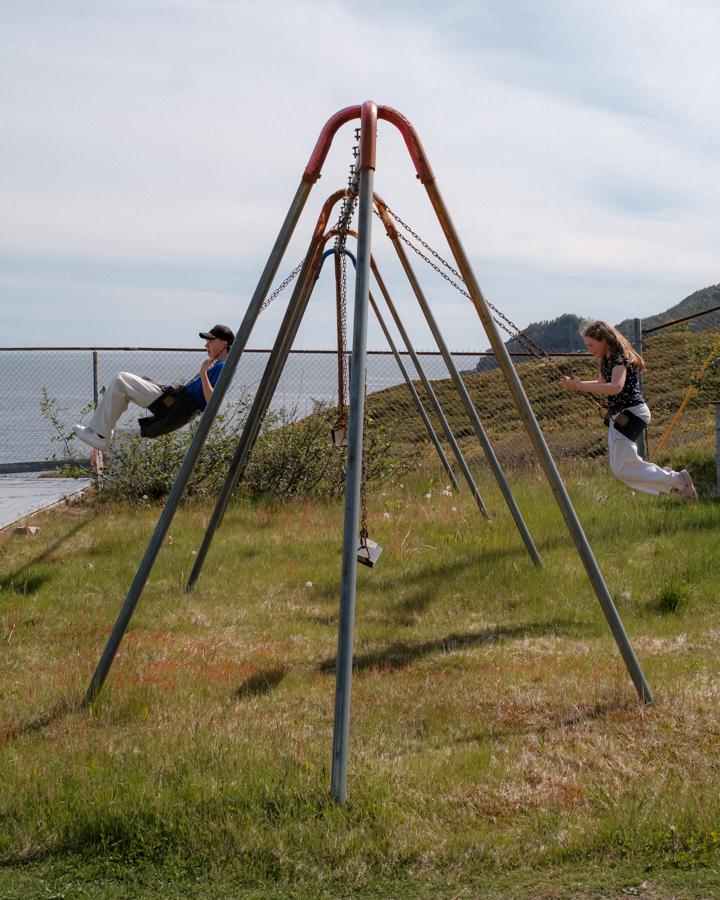
One after another, they discovered brightly painted rocks tucked beside boardwalks, among gardens, or lying quietly on rocky outcrops. What started as a walk soon became a game for them as they tried to compete in finding as many of them as possible.
Watching them explore the small town, I realized they weren’t disappointed by what McCallum wasn’t.
They were interested in what it was.
They wandered freely between houses and paths with a confidence that would be almost impossible in most communities today. Every painted rock represented another small act of kindness left behind by someone they would probably never meet.
The town was revealing itself to them in a completely different way.
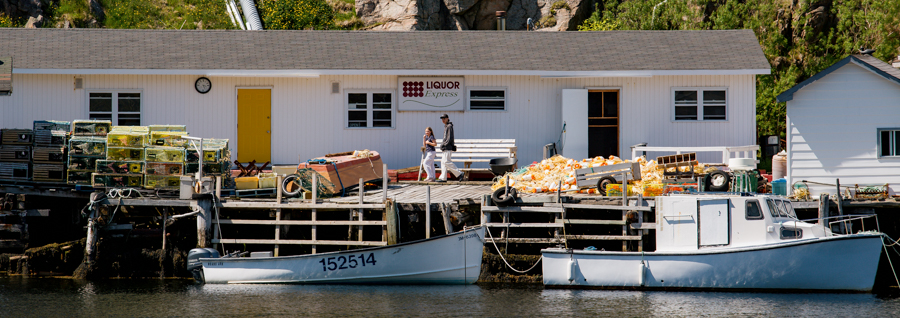
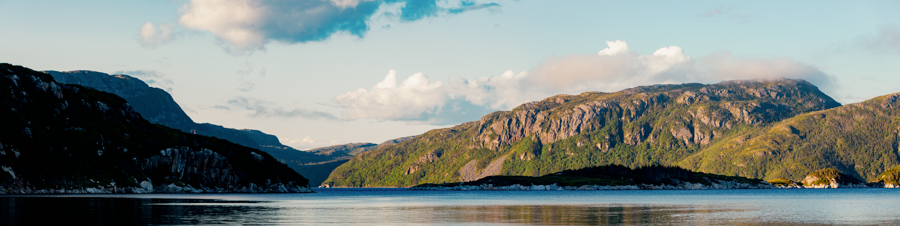
As the afternoon turned to evening, we walked farther.
I thought that going beyond the harbour would bring more meetings. Surely, people would be working in their sheds, chatting outside their houses, tending to gardens or congregating near the local shop.
However, every turn brought us only another beautiful stretch of boardwalk.
Another painted house.
Another empty path.
It was then that the realization hit me.
The outport I have carried with me from my childhood days wasn’t waiting behind the next corner.
It wasn’t hiding anywhere else in the harbour.
It had belonged to another time.
For a moment, I thought that maybe I came here several decades too late.
Then I lifted my camera again.
Since I realized that maybe I didn’t come to capture the story that I thought I would.
Maybe I came to capture the story that remained.
The People Who Remain
Despite its quietness, McCallum never made us feel unwelcome.
Long before we reached the community, kindness had already begun shaping the journey.
In Hermitage, where the ferry departs, we stopped at a small convenience store to ask about parking. Expecting a quick answer, we instead found ourselves in conversation with the woman behind the counter. She patiently explained every option available, opening Google Maps on my phone and pointing out exactly where we could leave our vehicle for the next several days.
It was a simple act of kindness.
Perhaps even an easily overlooked one.
However, it is a gesture which defines the essence of rural Newfoundland to a large extent.
The ferry ride was another example of a friendly welcome.
A group of passengers from nearby Gaultois struck up a conversation that lasted nearly the entire voyage. They spoke about growing up along the South Coast, about travelling between communities for dances and dart tournaments, and about visiting McCallum when they were younger. Their stories painted a picture of an outport network that once felt far less isolated than it appears on a map.
Separated by water, these communities had long been connected by it.
For generations, the ocean served as their highway.
Soon after our arrival at McCallum, our Airbnb host told us to visit the community store, since sometimes they may close after the ferry leaves.
On our way back to the harbour we bumped into a woman who carried some parcels which she had just picked up from the ferry.
“Do you own the store?” we asked her.
She smiled.
“No,” she replied, “however she will be opening very soon.”
Without a second thought she told us that we have plenty of time to drop our bags and come back.
It was another simple act of kindness.
Another act of quiet generosity.
In the store shelves contained a little bit of everything – groceries, houseware, snacks, frozen food – exactly that sort of shop, or general store, that makes an isolated community work.
The lady who was working at the counter greeted us in a friendly way, helped to find what we needed and got back to work.
Only later it dawned on me that I expected something different.
As a kid, I remembered stores like that being the places where people gathered, old men spent their time talking with each other spinning yarns, and sometimes lies, but there was always a gathering.
I was expecting to hear some stories from the locals.
Instead the shop was simply doing its job.
The shop which has always been doing it.
The expectations were mine.
Not the ones of the locals.
That evening, while wandering the harbour with my camera, I finally came across someone working outside.
He was standing inside a small shed built onto his fishing stage, occupied with something I couldn’t quite make out.
He looked up.
Smiled.
Said hello.
I replied in the same way and stopped to talk.
Like many conversations in Newfoundland, it began with the weather.
He told me the previous winter was one of the windiest he could remember.
“There were times,” he said, looking out toward the rest of the village, “I thought we’d lose half the harbour.”
His words were not dramatic or exaggerated.
They were matter-of-fact.
The kind of words which can be said only after decades of comparing winters in this tiny corner of the world.
I found myself asking most of the questions.
He answered all of them politely but never seemed to show any interest in why I traveled such a distance in order to photograph his community.
At first I wondered if I had interrupted him.
Later I realized something else.
For me, McCallum was something curious and special.
For him, it was simply home. Special, yes, but home.
Over the next few days we crossed paths with only a handful of other residents.
A young man offered a cheerful hello as he passed along the boardwalk.
Two women walked together through the community, chatting as they exercised.
Across the harbor I saw other people loading their gear near the wharf or working around their stages.
Life was happening.
Just quietly.
Without performance.
Without spectacle.
I came here with an expectation of documenting a disappearing way of life.
Instead, I found something else.
Daily life doesn’t become more dramatic just because a place is remote.
People still buy groceries.
Repair buildings.
Walk for exercise.
Talk about the weather.
Go about their day.
The extraordinary thing wasn’t what people were doing.
It was where they continued choosing to do it.
Our final day brought an unexpected surprise.
The ferry was supposed to depart at 2:15 that afternoon.
Wanting to be early, we lugged all our bags (including the six cameras I had brought along) toward the wharf nearly half an hour ahead of time.
Just before reaching the boat, a priest in white robes rounded the corner, followed by several members of the congregation.
As we passed, he smiled.
“Are you coming to church?”
We laughed politely, assuming he was joking.
He wasn’t.
When we stepped aboard, a crew member explained that the ferry wouldn’t be leaving until 4:00.
The priest had come over to conduct a church service, and the ferry would wait until it was finished.
It was one of those moments that perfectly captures life in an outport.
Schedules still adjust around people.
Around traditions.
Around community.
Not the other way around.
The unexpected delay gave us one final gift.
Walking back through town, we met Julian.
Originally from Ontario, Julian had retired to McCallum only a few years earlier after a lifetime of farming. Since arriving, he had purchased several houses, including one that he was converting into an off-grid residence where he planned to live regardless of what the future held for the community.
We talked for almost an hour.
He explained to us how the local service district works, how maintenance projects are organized and how life in the community without roads looks like.
When I carefully asked about resettlement, he paused before answering.
He preferred not to weigh in.
Although McCallum had become his home, he still considered himself an outsider in one important aspect.
If McCallum faces another resettlement vote, he does not want his opinion to influence the decision that belongs to the families whose roots reach generations back.
It struck me as an act of remarkable humility.
He chose McCallum.
Others had inherited it.
There is a difference.
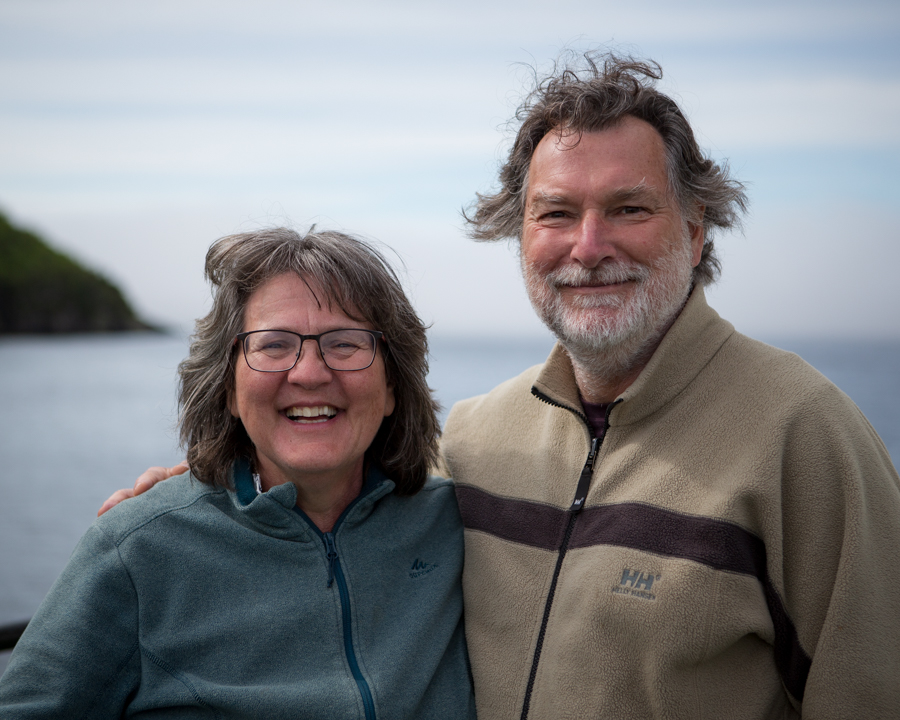
When we finally boarded the ferry later that afternoon, another conversation began.
This time with a couple from Québec who were travelling throughout Newfoundland in a camper van they had built themselves.
Just like many other visitors, they were amazed by the province.
They asked us questions about the culture.
About the communities.
About the people.
Hearing them, I realized something quietly ironic.
For three days I had been looking for the Newfoundland of my childhood.
Meanwhile, they were looking for Newfoundland itself.
And somehow…
They found it in our conversation.
Built by the Sea
Long before there was a community called McCallum, there was a harbour.
Like countless coves scattered along Newfoundland’s rugged coastline, it first drew people not for fertile soil or pleasant climate, but for the sea.
For centuries, these waters attracted seasonal fishing crews from Europe. Basque, Portuguese, French and English fishermen harvested the rich cod stocks that gathered along Newfoundland’s coast, returning home before winter closed in. It had been a source of livelihood, rather than home.
Permanent settlement came later.
Following the Seven Years’ War and the transfer of the French islands of Saint-Pierre and Miquelon to British rule, English families displaced from those islands began establishing communities along Newfoundland’s south coast. McCallum came to be during this time, part of a growing network of isolated settlements whose existence depended almost entirely on the bounty of the ocean.
They built homes wherever they could.
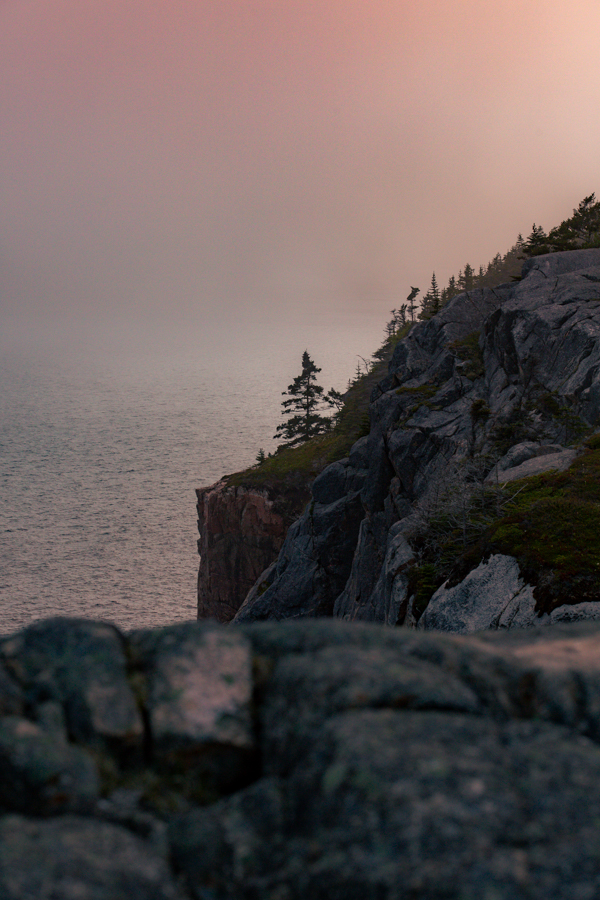
Not on open fields or river valleys, but on narrow shelves of rock carved between tall cliffs and sheltered water.
Looking around McCallum today, that determination is impossible to miss.
Boardwalks cling to exposed bedrock where roads were never practical.
Fishing stages stand on timber driven into the landwash.
Gardens grow on whatever small pockets of soil families they could create over generations.
Everything in this place is a testament to the will of its inhabitants.
Nothing about this place made easy living possible.
And yet, people made lives here.
To truly know Newfoundland, you have to understand the outport.
For generations, hundreds of small communities like McCallum had dotted the island’s coastline, isolated from one another by headlands, bays, or stretches of water, but bound by their reliance on the fishery.
The sea had been their highway.
The fishing stage had been their workplace.
The church, the school, and the community hall had been their places of gathering.
Children measured distance not by kilometers, but by coves.
Families understood weather not as something to talk about, but as a way to survive.
These communities defined the language, traditions, music and values that many Newfoundlanders recognized today.
The outport had never just been a place to live.
It had been the foundation upon which Newfoundland’s unique identity had been built.
That foundation has been changing for decades now.
Improved transport opened new opportunities elsewhere.
Healthcare, education and employment gradually became concentrated in larger centres.
While the 1992 cod moratorium hastened changes that had started happening long before then, it removed the economic foundation from many coastal communities.
Some moved voluntarily.
Others felt that they had no choice.
Communities disappeared off the map.
Schools closed.
Churches went quiet.
Resettlement programs paid for by the government relocated whole communities house-by-house, wharf-by-wharf, until nothing was left except ruins and memories.
This is often told as a tale of decline.
Perhaps, it is better described as one of transformation.
Newfoundland never stopped being Newfoundland.
It’s people simply took their culture elsewhere.
McCallum has been a part of this transformation for decades.
Ironically, the community became a home to families from other outports that have gone. People from Pushthrough, Muddy Hole, Indian Cove, Lock’s Cove, Richards Harbour, Great Jervais and Mosquito had started their new lives here, having left their old communities due to resettlement.
McCallum survived, because it became a home for places that couldn’t do that anymore.
However, it is facing many of the same challenges now.
Twice, people here have voted on government-assisted resettlement.
Twice, it hasn’t reached the 90 percent support threshold required according to the provincial policy.
The discussion didn’t end, however.
It has just paused.
More recently, another milestone quietly marked the passage of time.
St. Peter’s All Grade received its last graduate.
For the first time in generations, no children would attend this school.
Statistics can describe this reality.
A population of forty-five in 2021, closer to twenty permanent residents today.
A school without any students.
But numbers alone fail to explain what those changes feel like when standing in the community itself.
Because McCallum doesn’t feel abandoned.
It feels inhabited by memories, not people.
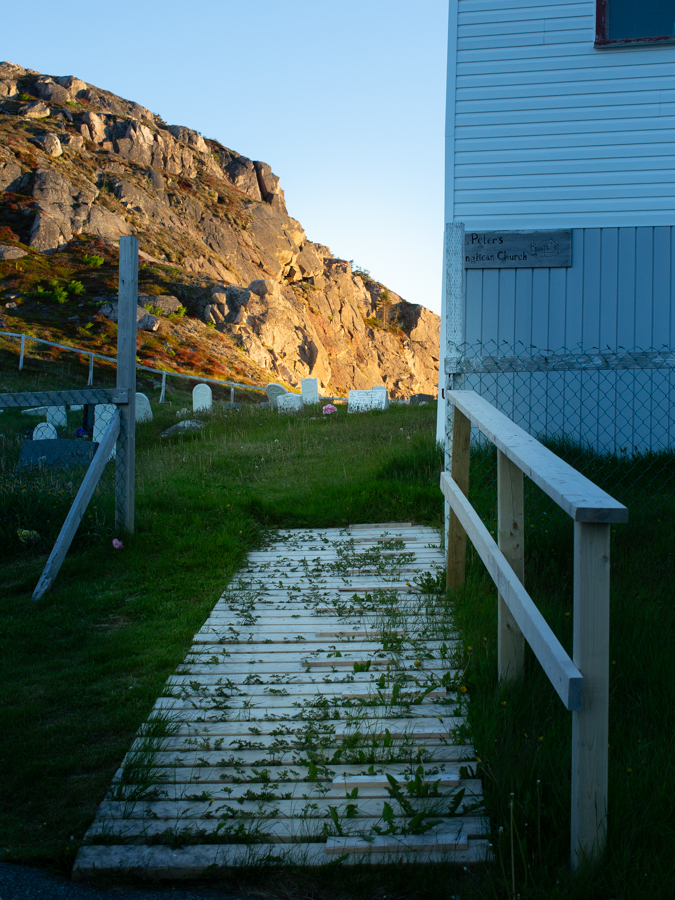
As I was walking McCallum’s paths, I kept thinking about all the generations of people who walked these same boardwalks before me.
Children running to school.
Fish drying beside the stages.
Families waiting for the coastal boat.
Neighbours stopping for conversation because there was always time for one more story.
None of those moments survive in the photographs I made during my visit.
However, I’m sure that they are present here in some other ways.
In the well painted houses.
The maintained gardens.
The fixed handrails.
An (surprisingly to us) active church.
Rocks painted for children to find.
All of these details testify that this place is cared for by people.
Not because it is easy.
But because it is home.
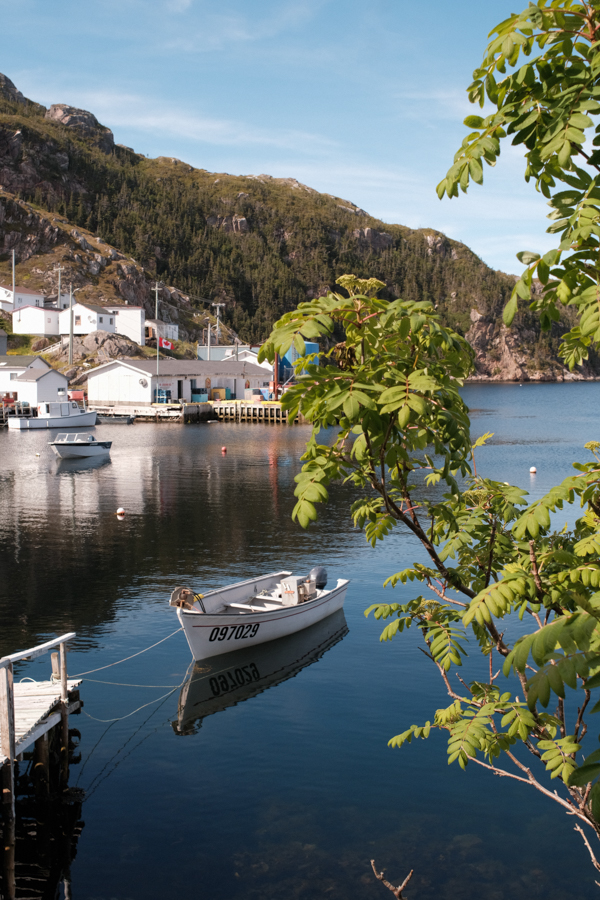
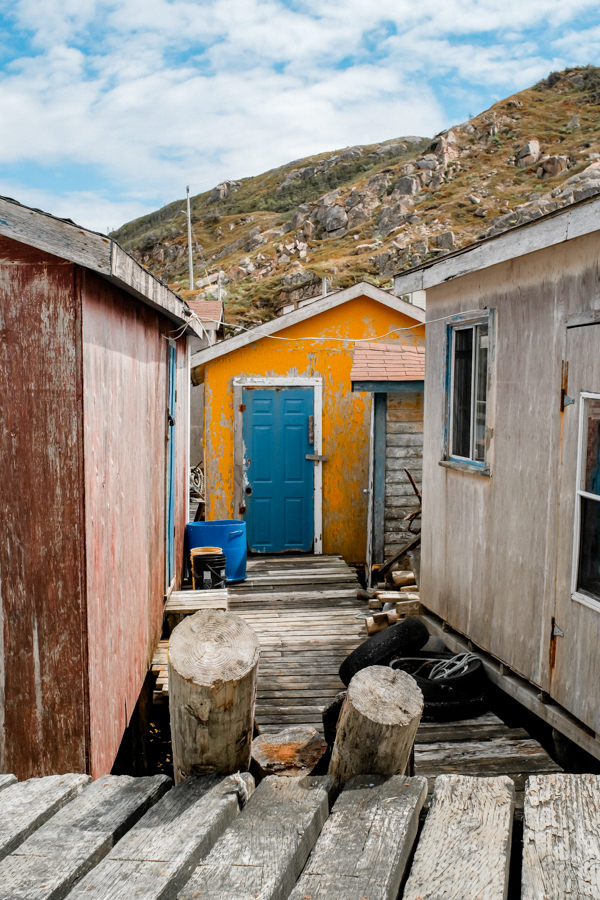
Perhaps that is what struck me most.
Communities like McCallum are often described in terms of what they have lost.
Population.
Industry.
Services.
Schools.
And yet, walking its boardwalks, I kept remembering all the things that remained.
Pride.
Generosity.
Stewardship.
Memories.
Sense of belonging.
These are hard things to measure.
But they seem to last much longer than statistics.
Epilogue – Witness
On our final afternoon in McCallum, the ferry pulled away from the wharf as it had only a few days before.
The boardwalks slowly receded into the landscape.
White houses became small points of colour against grey rock.
The harbour narrowed.
Then the headland slipped between us.
McCallum disappeared from view.
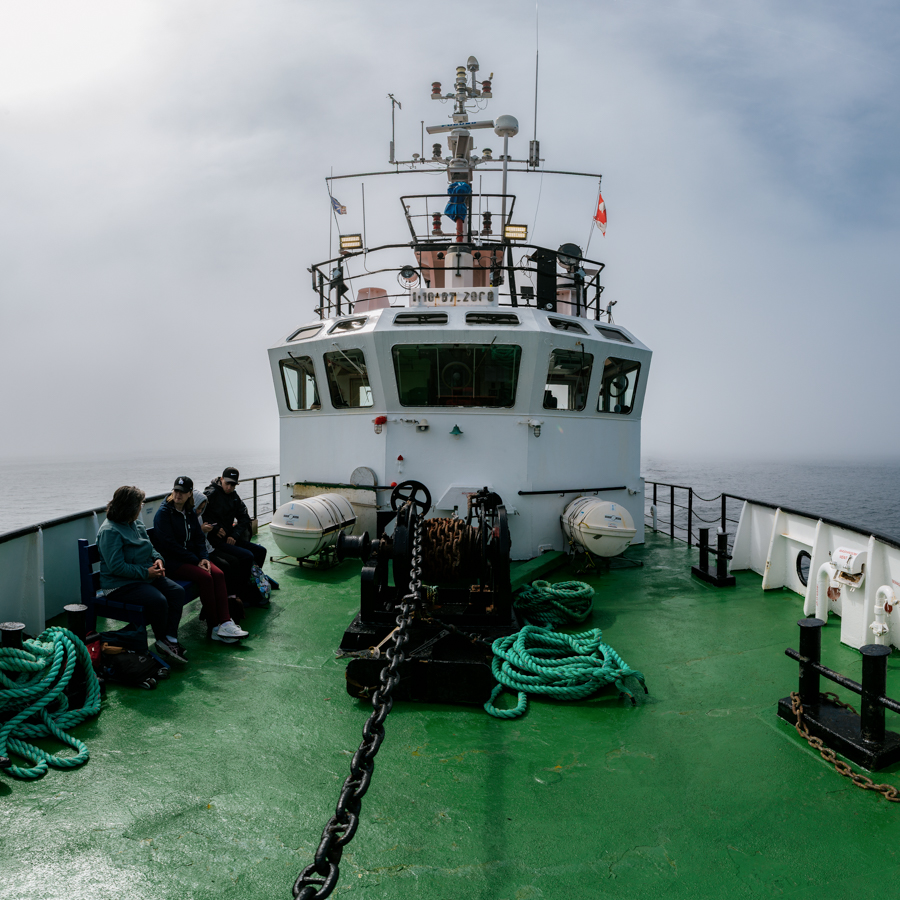
For most of the trip home, I stood outside.
The wind carried the smell of salt water across the deck as the coastline gradually faded into the distance.
I thought about the community we had just left.
About the people who still call it home.
About the generations who had built lives there with little more than determination, wood, and the ocean itself.
And I thought about my own expectations.
When I boarded the ferry in Hermitage, I believed I was travelling toward a memory.
I wanted my children to experience the outport that had shaped so much of my own childhood in La Poile.
I wanted them to hear the steady rhythm of boat engines.
To witness the smells of fish drifting from the stages.
To watch people gather on the wharf while dogs wandered freely between them.
I wanted to photograph a way of life that, in my mind, had somehow been waiting patiently for us.
It wasn’t.
And perhaps it never could have been.
Places change, and communities evolve.
Children grow up.
Industries disappear.
What we remember is rarely what we find.
At first, I wondered whether I had arrived too late.
Later, I realized I had simply arrived at a different chapter of the story.
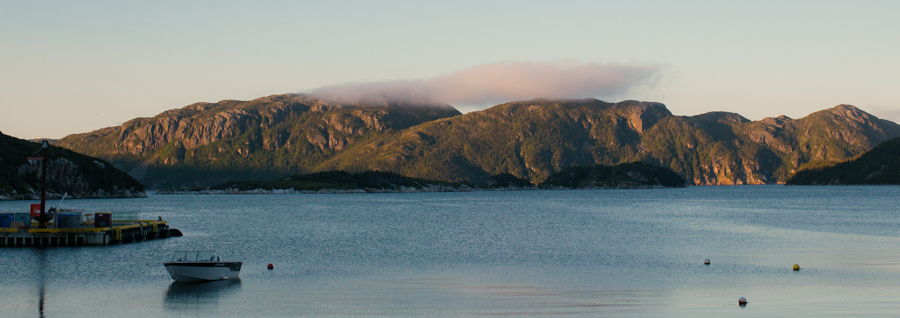
Before we exited the fog, and departed the ferry at Hermitage, the couple from Québec asked me what made the province so special.
It struck me that, during the previous three days, I had been searching for the answer to this question myself.
Not because I was not sure about the uniqueness of the province, but because I was afraid I could have somehow overlooked it.
Yet as we talked, I understood something truly profound.
The Newfoundland I had hoped to find in McCallum had not vanished.
It just evolved.
It exists in the woman from Hermitage who found the time to assist some strangers to park their car.
It exists in the people from Gaultois who were telling stories of dancing, playing darts, and being united by the sea.
It exists in the man smiling at us from his fishing stage and then getting back to his work.
It exists in Julian who decided to make a home in McCallum and respected the history of people who used to live there for generations.
And it exists in every person who welcomed us without expecting anything in return to a place that the majority of Newfoundlanders will never even visit.
Unconsciously, I was looking for Newfoundland in buildings the whole time.
But Newfoundland is in people.
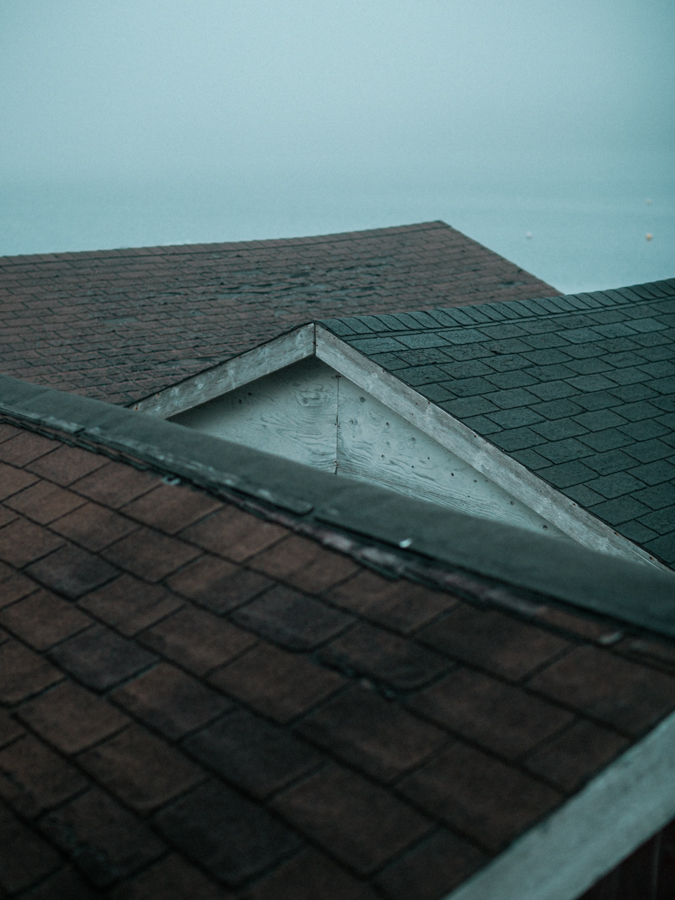
I also realized something else.
As photographers, we often arrive somewhere with a picture already formed in our minds.
We know the image we hope to make.
The story we hope to tell.
Sometimes reality delivers on those expectations.
Sometimes it gently destroys them.
The task then becomes not to force reality to fit the story we imagined, but to allow ourselves to see the story unfolding in front of us.
McCallum taught me that.
I travelled there hoping to document a traditional outport before it disappeared.
Instead, I photographed something quieter.
A community still deeply cared for.
Boardwalks that continue to connect people.
Gardens still lovingly maintained.
A church whose congregation could delay a ferry.
Children searching for painted rocks left by unseen hands.
Small conversations that revealed remarkable generosity.
None of those photographs are the ones I expected to make.
They are better because they are true.
One day, McCallum may change again.
Perhaps it will remain much as it is today.
Perhaps more families will return each summer.
Perhaps difficult decisions still lie somewhere in its future.
Those questions belong to the people who call it home.
Not to those of us privileged enough to visit for a short few days.
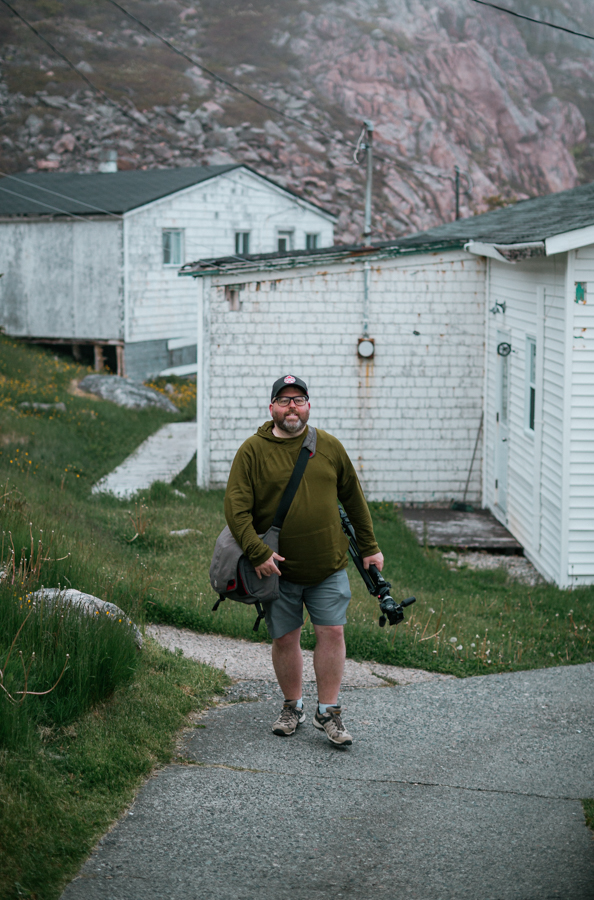
My goal and intention was never to predict what comes next, but to witness, document, and preserve what was there.
Thirty years from now, someone may stumble across these photographs without ever having heard of McCallum.
Perhaps by then its boardwalks will be quieter still.
Perhaps they will be overgrown.
Perhaps they will continue carrying the footsteps of another generation.
Whatever its future, I hope these photographs, and these words, offer something more than a record of buildings beside a harbour.
I hope they preserve the memory of a community that existed because generations of Newfoundlanders believed a life could be built along these rocks.
A place where families measured time by the arrival of the ferry.
Where homes clung to the shoreline because the sea provided a livelihood.
Where resilience was the norm.
Most of all, I hope they remind readers that places like McCallum deserve to be remembered.
Outports like McCallum aren’t meant to be remembered because they are disappearing, but because they mattered.
They helped shape Newfoundland.
They shaped the people who shaped Newfoundland.
And in ways both visible and invisible, they continue to do so.
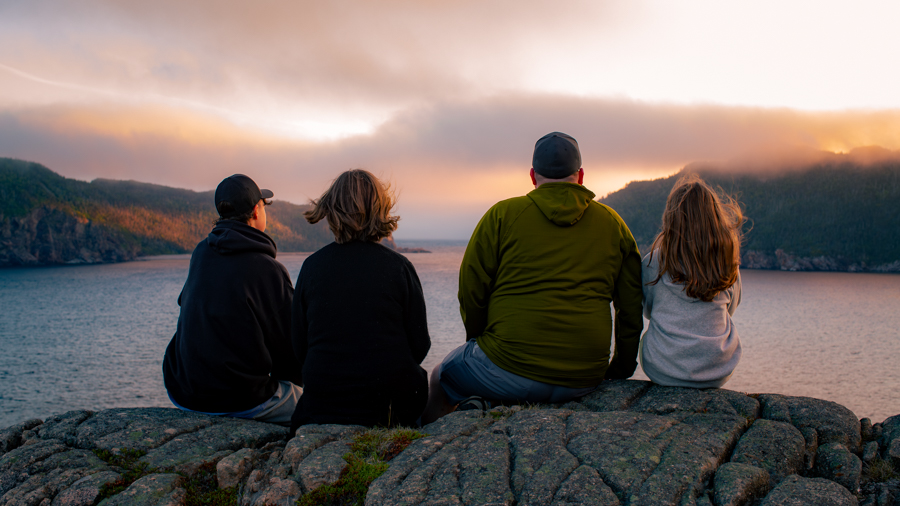
As the ferry carried us back toward Hermitage, my daughter excitedly counted the painted rocks she had found over the past three days.
My son looked back toward the coastline until it disappeared behind the horizon.
I stood quietly with my camera resting against my side.
For the first time since arriving, I wasn’t thinking about the photographs I hadn’t made.
I was grateful for the ones I had.
Because sometimes the greatest privilege a photographer can receive isn’t capturing a place at its peak.
It’s simply arriving while there’s still a story left to tell.
A Final Note
Thank you for taking the time to read What Remains.
If these photographs spoke to you, I’ve created a limited edition collection featuring three images from this project. Each collection is signed, numbered, and accompanied by a Certificate of Authenticity.
Only 10 collections are available.
You can view and purchase the collection by following this link.